

Did you know that by March 31, 2025, Ontario legislation mandates that all long-term care facilities provide an average of four hours of direct care per resident every day? When you’re searching for nursing homes in brampton, this number is more than just a target; it’s a vital benchmark for your loved one’s safety. It’s natural to feel overwhelmed by the selection process, especially when you’re worried about staffing shortages or the complex web of provincial regulations. You want a home where the staff is present, professional, and genuinely attentive.
We believe that clarity leads to better decisions, and this guide provides a practical framework to evaluate care quality. You’ll discover how to assess the essential roles of Registered Nurses and Personal Support Workers to ensure a safe, supportive environment. We’ll examine the latest 2026 care benchmarks, explain how to interpret local inspection data, and give you the tools to choose a facility with absolute confidence. Finding the right path for your family doesn’t have to be a struggle when you have the right facts in hand.
Key Takeaways
- Learn the critical differences between Ontario’s government-regulated long-term care and private retirement residences to ensure the right level of support.
- Discover how to evaluate professional staffing standards at nursing homes in Brampton to prioritize resident safety and infection prevention.
- Understand the impact of Ontario’s 2026 “four hours of care” mandate on direct resident health outcomes and overall facility quality.
- Master our step-by-step tour checklist to look beyond marketing materials and assess the genuine atmosphere of any care facility.
- Explore how strategic staffing partnerships help local facilities maintain top-tier care through rigorously vetted nursing professionals.
What Defines a High-Quality Nursing Home in Brampton?
Choosing a long-term care (LTC) facility involves more than just picking a location. In Ontario, LTC homes are government-regulated residences for people who require 24-hour nursing care and supervision. High-quality nursing homes in brampton stand out by exceeding basic clinical requirements and focusing on resident dignity. Unlike retirement residences, which are private pay communities focused on lifestyle and light assistance, LTC homes provide intensive medical support funded largely by the Province of Ontario.
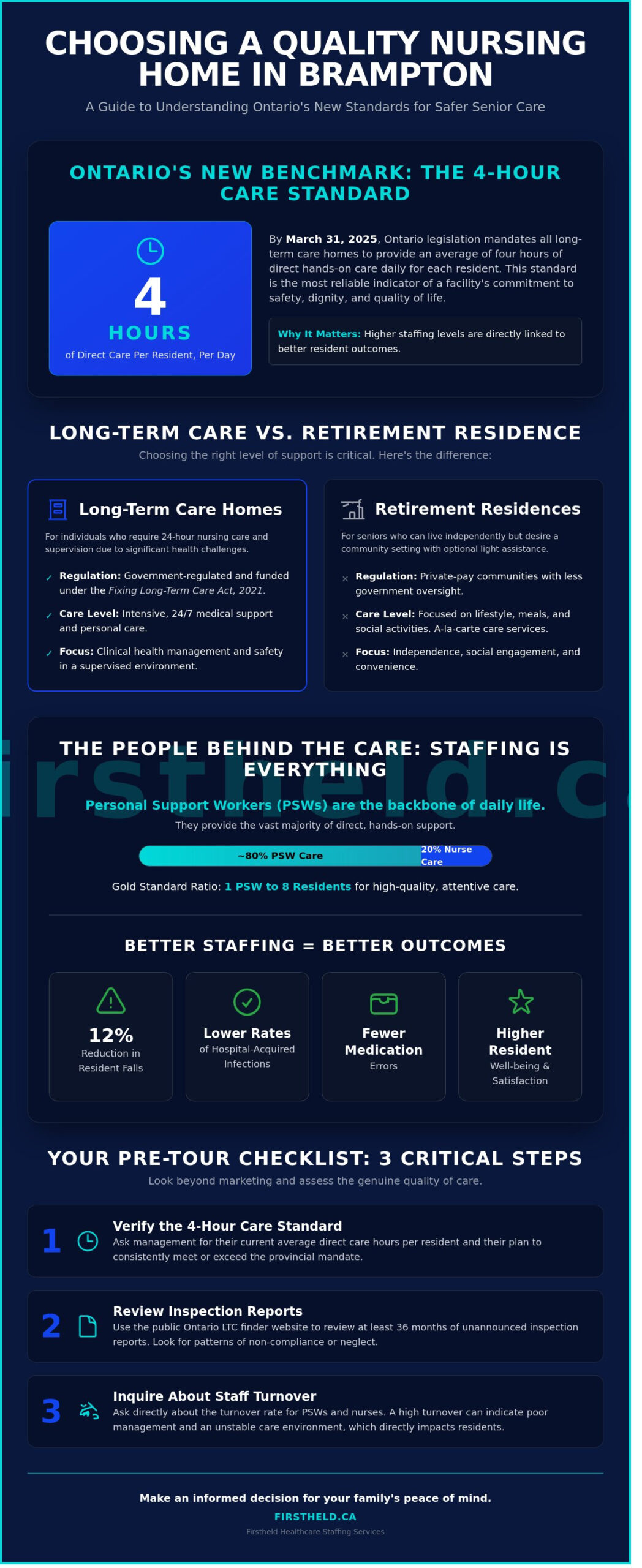
The standard for excellence is currently shifting due to the Ontario government’s commitment to the 2026 Care Standard. This initiative mandates that all LTC homes provide an average of four hours of direct personal care per resident every day by March 31, 2025, and into 2026. Staffing levels are the most reliable indicator of safety. When a facility maintains a high staff-to-resident ratio, response times improve, medication errors drop, and residents report higher levels of emotional well-being. It’s the difference between a facility that simply manages health and one that fosters a genuine quality of life.
The Landscape of Long-Term Care in Peel Region
Brampton’s senior population is growing at a rate that outpaces many other GTA municipalities. This growth creates a high demand for the 28 licensed long-term care homes currently operating within the Peel Region. Waitlists for these facilities can be long, often spanning several months or even years for specific preferred locations. Because of these delays, many families utilize home care services brampton as a bridge to ensure their loved ones remain safe while waiting for a permanent placement. You’ll find a mix of municipal, non-profit, and for-profit homes in the area, each offering different cultural programming and specialized dementia care units.
Regulatory Oversight and the Fixing Long-Term Care Act
The Ministry of Long-Term Care enforces strict safety protocols through the Fixing Long-Term Care Act, 2021. This legislation ensures that every home undergoes regular, unannounced inspections to check for compliance with provincial health and safety standards. You can easily access public inspection reports for nursing homes in brampton through the Ontario government’s official LTC finder website. These reports detail any non-compliance orders or “findings of neglect” that a facility has received in the past 36 months. Under this Act, the Residents’ Bill of Rights serves as a legal standard ensuring every senior is treated with courtesy, receives proper nutrition, and lives in a clean, safe environment.
- Direct Care: Look for facilities meeting the four-hour daily care target.
- Transparency: Review at least two years of Ministry inspection reports before touring.
- Staffing: Ask about the turnover rate of Personal Support Workers (PSWs) and Registered Nurses.
Evaluating Professional Staffing Standards in Care Facilities
Staffing quality is the single most important factor when choosing nursing homes in Brampton. The care team’s composition determines everything from daily comfort to life-saving medical interventions. By 2025, Ontario has mandated a target of four hours of direct care per resident daily. This standard relies on a precise mix of Registered Nurses (RNs), Registered Practical Nurses (RPNs), and Personal Support Workers (PSWs). When you evaluate a facility, don’t just look at the amenities. Look at the people.
Staffing levels directly impact safety outcomes. Research indicates that facilities with higher nurse-to-resident ratios see a 12% reduction in resident falls and significantly lower rates of hospital-acquired infections. 24/7 nursing coverage is a non-negotiable standard for any reputable facility. It ensures that medical emergencies are handled instantly without waiting for an on-call practitioner. To maintain these rigorous standards, many top-tier facilities partner with healthcare staffing agencies ontario to fill specialized roles and maintain consistency.
The Critical Role of Personal Support Workers (PSWs)
PSWs are the backbone of daily life. They provide roughly 80% of direct resident care, including bathing, dressing, and feeding. A ratio of one PSW to eight residents is often considered the gold standard for high-quality care. During a tour, watch the staff. A well-supported team moves with purpose rather than panic. If PSWs have time for brief, friendly conversations with residents, it’s a sign the facility isn’t cutting corners on payroll.
Specialized Nursing: RNs and RPNs in a Clinical Setting
RNs handle complex clinical management, such as advanced wound care and ventilator support. RPNs bridge the gap by managing medication administration and bedside clinical monitoring. Shift gaps can happen in any environment, but elite nursing homes in Brampton utilize emergency staffing solutions to ensure clinical stations are never vacant. This redundancy prevents errors and ensures that residents with chronic conditions receive their treatments on a strict schedule.
Selecting the right care environment involves balancing medical needs with financial realities. If you’re exploring how to fund a higher tier of private care for a loved one, looking into your home equity options can offer a practical path forward. High staffing standards often come with a higher price tag, but the peace of mind they provide is invaluable for families.
Staffing Ratios vs. Resident Outcomes: What the Data Shows
Direct care hours are the most reliable predictor of resident safety and health. Data from the Canadian Institute for Health Information (CIHI) shows a clear link between higher staffing levels and a reduction in hospitalizations. As of 2026, nursing homes in Brampton have fully integrated the Ontario provincial mandate of four hours of direct care per resident, per day. This standard, which reached its final implementation phase in March 2025, ensures that every senior receives the dedicated attention required for complex clinical needs.
Consistency is vital for residents living with Alzheimer’s or other forms of dementia. When staffing turnover remains high, residents often experience increased anxiety and “sundowning” symptoms. Research suggests that facilities with a turnover rate below 20% see a significant decrease in the use of antipsychotic medications. Specialized staffing agencies now play a critical role in the Peel Region. They provide trained relief workers during seasonal flu surges or COVID-19 outbreaks, ensuring that care routines remain uninterrupted even when regular staff are sidelined.
- 4.0 Hours: The mandatory daily direct care minimum in Ontario as of 2026.
- 12% Reduction: The drop in fall-related injuries when staffing ratios are maintained.
- Continuity: Regular caregivers reduce behavioral episodes in memory care units by 20%.
Addressing the Staffing Shortage in Brampton
Recruiting qualified Registered Nurses (RNs) and Personal Support Workers (PSWs) remains a challenge due to the high cost of living in the GTA. Local facilities often compete with hospital systems for the same talent pool. To bridge this gap, many nursing homes in Brampton partner with specialized healthcare agencies to ensure that care standards never dip during labor shortages. It’s a reality that chronic staff burnout can lead to a 15% decline in resident satisfaction scores, making proactive recruitment and mental health support for staff a top priority for administrators.
The Value of Multidisciplinary Care Teams
Modern care goes beyond basic nursing. Effective facilities utilize multidisciplinary teams that include registered dieticians, physiotherapists, and social workers. This coordinated approach prevents unnecessary transfers to Brampton Civic Hospital by managing chronic conditions on-site. In a city as diverse as Brampton, cultural competency is a non-negotiable skill. Care teams that speak multiple languages, such as Punjabi, Hindi, or Urdu, foster a sense of security and belonging for residents. This localized expertise ensures that care plans respect the cultural and dietary preferences of the Peel Region’s senior population, leading to better nutritional intake and emotional health.
Choosing the Right Facility: A Checklist for Brampton Families
Selecting a long-term care environment requires more than a quick walk-through of a decorated lobby. To find the best nursing homes in brampton, you must observe the facility during peak activity hours, such as 11:00 AM or 3:00 PM. These times reveal how the team handles the transition between meals and shift changes. A brochure might promise luxury, but the reality lives in the corners of the building and the expressions of the residents. Look for cleanliness in high-traffic areas and ensure the air smells fresh rather than heavily masked by industrial perfumes.
Critical Questions to Ask the Administrator
You need concrete data to evaluate the stability of a care team. Don’t settle for vague promises of “quality care.” Ask these five specific questions to understand the operational health of the facility:
- What was your staff retention rate for Personal Support Workers (PSWs) in 2025?
- How do you maintain mandated care ratios when a staff member calls in sick at the last minute?
- Do you have a formal partnership with a professional staffing agency to provide supplemental nurses during emergencies?
- What specific specialized training do your PSWs receive for residents living with advanced dementia?
- How many hours of direct care does each resident receive on average every 24 hours?
Observing Resident-Staff Interactions
The way staff members interact with residents tells you everything about the facility’s culture. Watch for responsive care versus task-oriented care. In a high-quality environment, staff members know residents by their preferred names and understand their specific daily habits. If you see staff members rushing past residents without making eye contact, it’s a sign of a high-stress, understaffed environment. Pay close attention to call bell response times; in top-tier nursing homes in brampton, a response should occur within 5 to 7 minutes. If bells ring for 12 minutes or longer, the facility likely lacks the headcount to provide safe, attentive care.
Check the social calendar and then verify it. If the schedule says there’s a music therapy session at 2:00 PM, go to the activity room and see if it’s actually happening. Quality of life depends on these engagement opportunities. Meal quality is equally vital. Ask to see a tray being served to a resident in their room to ensure the food is hot, nutritious, and matches the posted menu. Facilities that prioritize their staffing partnerships often have better-managed dining rooms because their permanent team isn’t stretched too thin by basic administrative tasks.
Planning for long-term care often involves significant financial shifts. You can leverage your home equity to ensure your family has the liquid capital needed for the highest standard of private or supplemental care.
How Firstheld Supports Excellence in Brampton Nursing Homes
Firstheld acts as the vital bridge between operational stability and resident well-being. We aren’t just a staffing vendor; we’re a strategic partner for nursing homes in brampton that refuse to settle for “good enough.” By 2026, the demand for specialized geriatric care in the Peel Region is projected to rise by 18%, making reliable staffing a critical pillar of facility success. We provide “Compassion on Demand” to ensure that sudden care gaps don’t compromise the safety or dignity of residents. Administrators face immense pressure to maintain high occupancy and high ratings, and we provide the human capital to make that possible.
Our approach focuses on alleviating the stress that comes with short-staffing. When a facility is short an RN or a PSW, the remaining team burns out, and residents feel the shift in energy. Firstheld steps in with a solution-oriented mindset, prioritizing speed and clinical accuracy. We empower administrators to look forward, knowing their floors are covered by professionals who care as much about the community as they do.
Vetting for Quality: The Firstheld Difference
We look far beyond a basic background check. Our vetting process for RNs, RPNs, and PSWs is built on a foundation of clinical competence and high emotional intelligence. Every candidate must demonstrate a deep understanding of the Fixing Long-Term Care Act, 2021, ensuring they’re ready to hit the floor in compliance with Ontario’s strict standards. This rigorous screening is why we are a leader in the strategic role of a healthcare employment agency within the local market.
- Clinical Testing: We verify skills through practical assessments tailored to 2026 geriatric care standards.
- Soft Skill Evaluation: We prioritize staff who demonstrate empathy and patience, which are essential for nursing homes in brampton serving diverse populations.
- Regulatory Alignment: Our team receives quarterly updates on Ministry of Long-Term Care directives to ensure seamless integration into your facility.
Partnering for a Safer Future in Long-Term Care
Our commitment to the Brampton community is rooted in the belief that quality care starts with the right people. We understand the unique cultural fabric of the Peel Region and recruit staff who reflect that diversity. Whether your facility needs emergency coverage within two hours or a consistent long-term contract to stabilize a specific wing, our response is always fast and transparent. We don’t believe in the rigid, automated systems of larger agencies; we offer a human-led process that values your specific needs.
If you’re an administrator looking to shore up your team, or a family member advocating for better care, reach out to Firstheld. You can contact our local office for immediate staffing support or to discuss a customized partnership plan. Excellence in care isn’t a luxury; it’s a standard that every senior deserves. Let’s build a safer, more compassionate future for our seniors together. It’s that simple.
Securing Superior Care Standards for Brampton Families
Selecting the right facility involves more than a simple tour; it requires a deep dive into staffing data. Research indicates that facilities maintaining a 4.1 hour per resident day care ratio achieve significantly better health outcomes. Finding high-quality nursing homes in brampton means prioritizing institutions that invest heavily in their frontline teams. Since 2021, Firstheld has bridged the gap between clinical needs and professional talent across Ontario’s healthcare sector. We provide a human-led approach to staffing that bypasses the rigid, automated hurdles of traditional agencies. Our team specializes in placing rigorously vetted RNs, RPNs, and PSWs who meet high compassionate care standards. You deserve a partner that values clinical excellence as much as you value your family’s comfort. It’s time to move forward with a solution that puts people first. We’re ready to help you navigate these staffing choices with clarity and confidence.
Partner with Firstheld for Reliable Healthcare Staffing
Frequently Asked Questions
How do nursing homes in Brampton manage staffing shortages?
Nursing homes in Brampton utilize the Ontario government’s C$4.9 billion investment strategy to recruit and retain 27,000 new staff members by 2026. Facilities bridge gaps by using specialized nursing agencies and offering signing bonuses that often reach C$5,000 for Registered Practical Nurses. These homes also implement mentorship programs to reduce turnover rates, which historically sat near 20% in the long-term care sector.
What is the difference between a nursing home and home care in Ontario?
A nursing home provides 24-hour medical supervision and secure housing in a clinical setting, whereas home care delivers specific medical or personal services in your own house. While home care costs vary by the hour, nursing homes in Brampton charge standardized monthly rates set by the province. Nursing homes are the practical choice for seniors who require constant monitoring that a visiting aide cannot provide.
Are nursing homes in Brampton regulated by the government?
Yes, every nursing home in Brampton must comply with the Fixing Long-Term Care Act, 2021, and is overseen by the Ontario Ministry of Long-Term Care. Inspectors conduct unannounced visits to evaluate over 150 safety standards, including food quality and medication management. You can view the specific inspection results for any Brampton facility on the provincial government’s public reporting website to ensure they meet your standards.
How much does a nursing home in Brampton cost per month in 2026?
In 2026, the monthly co-payment for a basic room in a Brampton nursing home is approximately C$2,175, while private rooms cost about C$3,100. The Ontario government sets these rates annually and provides subsidies for residents who can’t afford the basic accommodation fee. It’s important to remember that these costs cover meals, laundry, and nursing care, making it a predictable expense for families managing a senior’s budget.
Can I hire private nurses for a loved one already in a nursing home?
You can hire private nurses or personal support workers to provide additional one-on-one care for a resident. These external providers must follow the facility’s specific immunization and insurance policies before they start work. Families often choose this route to supplement the standard care hours, ensuring their loved ones receive extra companionship or specialized therapy during the day.
What are the minimum staffing requirements for Ontario long-term care facilities?
Ontario law mandates that long-term care facilities provide an average of 4 hours of direct nursing and personal care per resident every day. This requirement, fully implemented by March 2025, ensures that staff have enough time for meaningful interaction and medical tasks. Additionally, at least one Registered Nurse must be on-site and available 24 hours a day to manage emergencies and complex clinical needs.
How long is the waitlist for a nursing home in the Peel Region?
The waitlist for a nursing home in the Peel Region typically ranges from 6 months to over 3 years depending on the specific facility and the applicant’s health priority. With more than 38,000 people currently waiting for a bed across Ontario, those in crisis situations are prioritized for faster placement. You can choose up to five preferred homes to increase your chances of securing a spot in a timely manner.
What should I do if I have a complaint about a nursing home in Brampton?
You should first take your concerns to the home’s Administrator or the Director of Care to resolve the issue internally. If the facility doesn’t address your problem, call the Long-Term Care Family Support and Action Line at 1-866-434-0144. This service operates seven days a week and ensures that the Ministry of Long-Term Care investigates your report and holds the facility accountable for any service failures.
