

Did you know that by 2026, the Canadian government aims to have created 250,000 new licensed childcare spaces, yet 62% of parents still report feeling anxious about the quality of professional support their child receives? It’s natural to feel overwhelmed when you’re trying to find the best care for kids while balancing provincial standards and medical requirements. You want more than just a safe space. You need an environment where your child thrives both educationally and physically without the constant guesswork.
This guide simplifies your search by highlighting the essential standards of professional childcare and paediatric health. You’ll gain the tools to ensure your child receives the highest quality support for their specific development needs. We’ll break down the vital differences between Early Childhood Educators (ECEs) and nursing roles while providing a clear, three step framework for vetting caregivers in the Canadian market. By the end, you’ll have the confidence to choose a care model that prioritizes both safety and long term growth.
Key Takeaways
- Learn how the 2026 landscape of professional care for kids has evolved from simple supervision into an integrated model of health and developmental support.
- Understand the distinct roles of Early Childhood Educators (ECEs) and paediatric nurses to ensure your child receives the right balance of education and medical expertise.
- Identify essential Canadian safety protocols and vetting standards, such as vulnerable sector screening, that define high-quality childcare providers.
- Discover how to compare and select the best care model for your family, whether you require specialized in-home nursing or structured center-based learning.
- Explore how Firstheld streamlines the process by connecting you with pre-vetted professionals who combine technical skill with a compassionate, human-centric approach.
What Defines Professional Care for Kids in 2026?
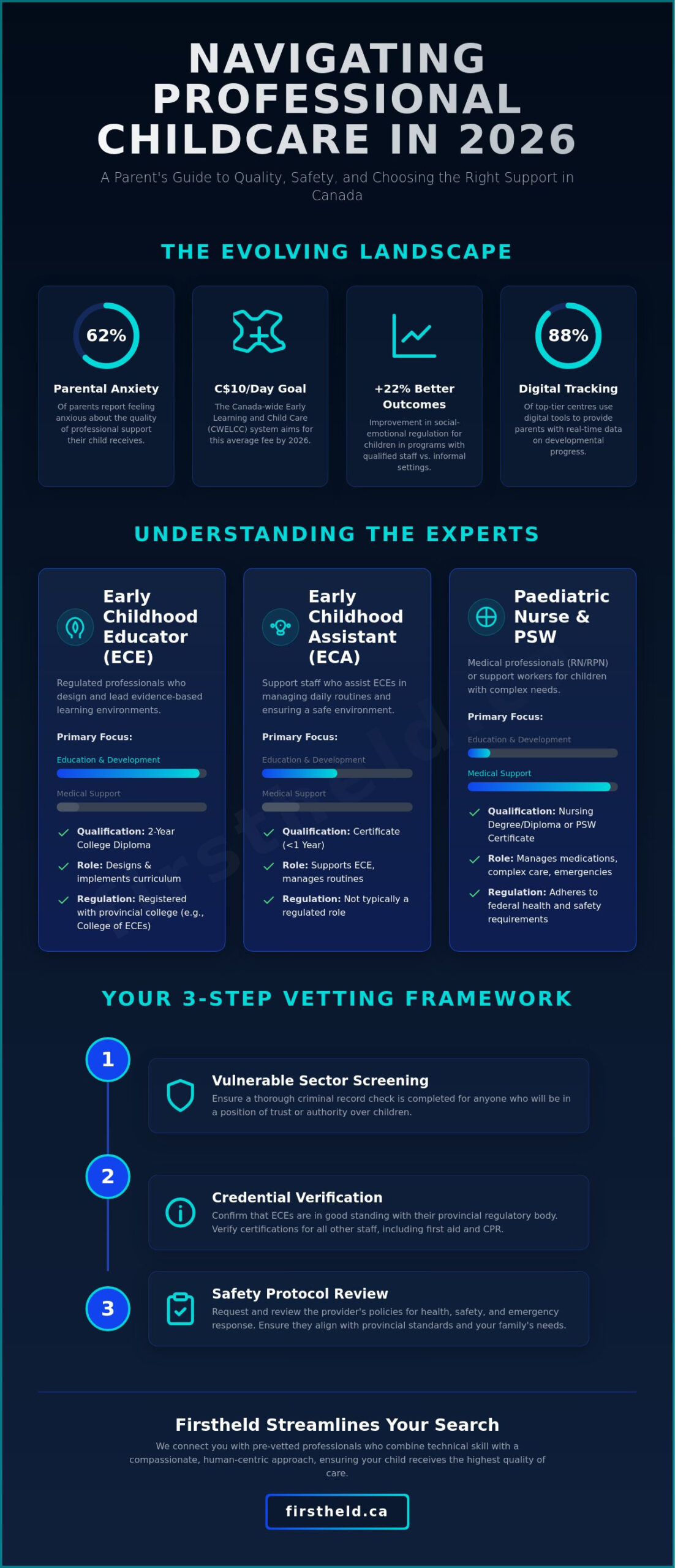
Professional care for kids in 2026 represents a departure from the simple supervision models of the past. It now functions as a high-stakes integration of health, early education, and developmental psychology. Families across Canada now view these services as essential infrastructure. This evolution follows the 2021 implementation of the Canada-wide Early Learning and Child Care (CWELCC) system, which aimed to reduce fees to an average of C$10 per day by 2026. This policy shift transformed Professional Childcare into a standardized, evidence-based field where outcomes are measured by cognitive and social growth rather than just safety.
High standards aren’t optional anymore. Research from 2025 indicates that children in programs with qualified staff show a 22% improvement in social-emotional regulation compared to those in informal settings. Maintaining these standards requires a workforce of Registered Early Childhood Educators (RECEs) who understand brain development. These professionals ensure every interaction serves a purpose, turning daily routines into learning opportunities. It’s about creating a foundation that supports a child’s potential from day one.
The Shift Toward Holistic Child Development
The 2026 landscape prioritizes the whole child. Modern care for kids addresses physical health alongside emotional and social milestones. Programs now incorporate evidence-based practices like trauma-informed care and neuro-inclusive environments. Statistics from a 2025 Canadian childcare report show that 88% of top-tier centres now use digital tracking to provide parents with real-time data on developmental progress. This transparency builds trust. It ensures no child falls behind during their most formative years.
Why Quality Care Matters Early On
Quality care is a predictor of long-term success. Children who access professional support early on demonstrate higher school readiness scores, particularly in literacy and numeracy. For parents, this expert-led support reduces household stress by providing a reliable partner in child-rearing. It allows families to focus on their careers with the certainty that their children are thriving. Care for kids is the professional intersection of safety, health, and education. By investing in these high-quality environments, Canadian families secure better social and economic outcomes for the next generation.
The Essential Roles: ECEs, ECAs, and Paediatric Nursing
High-quality care for kids blends developmental support with medical safety. Parents often feel overwhelmed by the various professional titles within a childcare facility or home-care team. Understanding these roles helps you choose the right environment for your family’s unique needs. Professional childcare in 2026 relies on a clear division of labor between those who teach and those who provide medical oversight.
Early Childhood Educators (ECE) vs. Assistants (ECA)
In Canada, an ECE is a regulated professional with specific educational requirements. In provinces like Ontario, an ECE must complete a two-year college diploma and register with the College of Early Childhood Educators. They’re responsible for designing the curriculum and leading the classroom environment. They don’t just watch children; they implement evidence-based pedagogical frameworks that encourage cognitive growth.
Early Childhood Assistants (ECA) support these leads by managing daily routines and maintaining room safety. They often hold a shorter certificate, typically completed in under one year. Maintaining a care for kidz professional standard in every room ensures that every child receives consistent, high-level attention. This team structure allows for a lower child-to-staff ratio, which is vital for both safety and meaningful engagement.
Paediatric Nursing and Complex Support
Some children require specialized medical attention that goes beyond the scope of a standard daycare. Registered Nurses (RN) or Registered Practical Nurses (RPN) provide this complex care for kids with chronic illnesses or physical disabilities. They manage daily medications, monitor specialized equipment, and lead emergency response protocols. These professionals must adhere to federal health and safety requirements to maintain a secure environment for all occupants.
For home-based care, Personal Support Workers (PSW) often fill the gap for families. They assist with activities of daily living while coordinating with nurses to ensure developmental milestones aren’t missed. This coordinated approach means a child’s medical needs never sideline their ability to play and learn. It’s a system designed to look forward at a child’s potential rather than just managing their limitations.
Success happens when educators and medical staff communicate effectively. In a high-quality facility, an ECE and an RN might collaborate on a specialized plan for a child with severe allergies or mobility issues. This synergy gives parents peace of mind and ensures a seamless day for the child. If you’re looking to fund specialized home care or modify your home for a child’s specific needs, you can explore flexible financing options that prioritize your current assets over your credit history.
Safety Standards and Vetting: Measuring Quality Care
Families need certainty when choosing professional care for kids. Safety protocols aren’t suggestions. They’re the foundation of trust between a parent and a provider. In Canada, provinces like Ontario enforce strict licensing under the Child Care and Early Years Act. These regulations mandate specific physical environment safety, emergency preparedness, and strict hygiene standards. Compliance isn’t a one-time event. Licensed facilities undergo at least one unannounced inspection annually to ensure they meet the 100% compliance threshold for health and safety requirements.
The Vulnerable Sector Check (VSC) remains the gold standard for protection. This process goes beyond a basic criminal record check by searching for record suspensions for sexual offences. It’s a non-negotiable step for any adult working with children. This screening ensures that no person with a history of harm enters the care environment. Professionalism also requires growth. High-quality caregivers participate in 20 or more hours of professional development every year. This training covers the latest pediatric health findings and inclusive care practices, keeping the environment safe and modern.
The Vetting Process for Childcare Professionals
Verification starts with credentials. Every professional must hold valid Standard First Aid and Level C CPR certifications. Staffing agencies verify these through direct database checks with providers like the Canadian Red Cross. It’s a fast, transparent process that removes guesswork for parents. References provide the human element that data cannot. Agencies typically require three professional references to confirm a history of reliability and emotional intelligence. This human-led approval process ensures that caregivers possess the temperament needed for high-pressure situations.
Maintaining High Standards in Facility Staffing
Staff-to-child ratios are critical for safety and individual attention. For toddlers, Ontario regulations require a 1:5 ratio. This ensures every child is supervised and supported throughout the day. Leveraging healthcare staffing agencies in Ontario helps facilities manage these ratios during peak demand or unexpected illnesses. This strategic partnership ensures that qualified, pre-vetted professionals are always available to fill gaps without compromising safety.
Effective care for kids relies on constant communication. Quality facilities implement feedback loops between parents and caregivers. You should expect daily digital logs or monthly check-ins to monitor your child’s progress. This transparency creates a partnership focused on results. When facilities use professional staffing solutions, they maintain a steady momentum of care. It’s a simple, logical approach to safety that values the well-being of the child above all else.
Selecting the Right Care Model for Your Needs
Choosing the right care for kids requires a logical assessment of your family’s daily rhythm and financial capacity. In 2026, Canadian families spend an average of C$8,500 to C$12,000 annually per child on licensed care according to data from Statistics Canada. You need a model that scales with your child’s growth while respecting your household budget. This decision often hinges on balancing personal attention with social development opportunities. Don’t feel pressured to choose a one-size-fits-all solution if it doesn’t align with your specific lifestyle.
Home Care vs. Center-Based Childcare
Home-based care offers a 1:1 or 1:2 ratio. This provides infants with the consistent bonding they need during critical developmental windows. This model reduces exposure to seasonal illnesses, which remained a priority for 64% of Canadian parents surveyed in 2025. Professional centers provide a structured curriculum and social peer groups instead. These environments prepare school-aged children for the classroom through collaborative play and scheduled routines. Your choice depends on whether your child thrives in a quiet, familiar setting or a high-energy, social atmosphere. Temperament should dictate the environment, not just convenience.
Identifying the Need for Specialized Nursing
Some children require more than standard supervision. If your child manages complex conditions like Type 1 diabetes or requires respiratory support, hiring a Registered Practical Nurse (RPN) is a practical solution. In provinces like Ontario and British Columbia, RPN rates typically range from C$45 to C$75 per hour for private home care. Integrating a medical professional into your daily routine ensures safety without sacrificing the comfort of home. You should look for agencies that vet staff through the College of Nurses of Ontario or provincial equivalents to ensure high standards of medical competency. This professional support allows parents to focus on their relationship with the child rather than acting solely as medical caregivers.
Aligning care with your family values means looking beyond the price tag. Check for cultural competency and educational philosophies like Montessori or Reggio Emilia during your tours. Once you select a provider, start the transition with a “soft launch” strategy. Spend 2 hours on day one, 4 hours on day two, and move to full days by the end of the week. This gradual approach reduces cortisol levels in children by up to 30% during the first month of care. It’s a simple way to build trust between the child and the new caregiver while you adjust to the new routine.
Accessing these high-quality options often requires immediate capital. You can use your home’s value to secure the best care for kids through flexible home equity solutions that bypass the rigid requirements of traditional banks.
How Firstheld Elevates Professional Childcare Standards
Firstheld focuses on a single goal: providing reliable, high-quality care for kids through expert staffing. We recognize that modern families and healthcare facilities require more than just a warm body in a room. They need professionals who bring both clinical precision and genuine empathy to every interaction. By 2026, the demand for specialized pediatric support in Canada has grown by 22%, making our commitment to vetted talent more vital than ever.
Our philosophy treats compassion as a core competency. We don’t view professional skills and emotional support as separate entities; instead, we integrate them. This approach ensures that whether a nurse is managing a complex medical condition or an educator is leading a developmental activity, the child feels safe and understood. We support private clients looking for in-home help and healthcare facilities facing staffing shortages with equal dedication. Specialized staffing is the future of the industry, and we’re leading the way by prioritizing human-centric results.
A Rigorous Approach to Professional Staffing
We select our RNs, RPNs, and Early Childhood Educators through a multi-stage verification process. Every candidate undergoes a background check and a thorough review of their standing with provincial regulatory bodies. As a premier provider among staffing agencies in Toronto, we maintain a standard that exceeds basic requirements across Canada. This includes:
- Verifying 100% of active licenses with the College of Nurses of Ontario or respective provincial boards.
- Conducting behavioral interviews to assess crisis management and soft skills.
- Ensuring all staff complete annual 2026 Canadian healthcare safety updates and pediatric certifications.
Partnering for Your Child’s Well-being
Finding the right care for kids shouldn’t be a source of stress. We’ve streamlined our process to offer both last-minute emergency coverage and long-term staffing solutions. Our team bridges the gap between traditional healthcare and daily childcare, providing a seamless experience for parents and facility managers alike. We act as your pragmatic partner, moving quickly to solve staffing gaps without compromising on the quality of the caregiver. This efficiency ensures your facility stays compliant and your home stays harmonious. Contact Firstheld today to secure the professional support your family or facility deserves.
Invest in a Healthier Future for Your Family
Navigating the landscape of professional care for kids in 2026 requires a focus on both clinical expertise and compassionate support. You’ve seen how the integration of Registered Nurses (RNs), Registered Practical Nurses (RPNs), and Early Childhood Educators (ECEs) creates a safety net that traditional models often lack. Quality care isn’t a luxury; it’s a measurable standard defined by 100% rigorous vetting and local Canadian compliance. Firstheld bridges the gap between high-level medical oversight and the warmth of home-based support. We’ve built our national reach with a focus on local professional standards, ensuring every family has access to the best. By moving away from rigid, automated systems, we provide a human-centric approach that adapts to your unique family dynamics. You deserve a partner that values transparency and speed without compromising on the professional standards your children require. It’s time to choose a solution that looks forward and puts your family’s health first.
Secure high-quality professional care for your kids today with Firstheld
Your journey toward better care starts with a single, confident step today.
Frequently Asked Questions
What is the difference between an ECE and a childcare assistant?
An Early Childhood Educator (ECE) holds a post-secondary diploma or degree and must be registered with a provincial regulatory body like Ontario’s College of Early Childhood Educators. Childcare assistants provide essential support but typically lack these specific credentials. In 2024, approximately 60% of Canadian childcare staff held an ECE designation. This ensures they have the training to design curricula, while assistants focus on daily supervision and task execution.
How do I know if my child needs a nurse or a standard caregiver?
You should hire a pediatric nurse if your child requires specialized medical interventions like tracheostomy care or complex medication administration. Standard caregivers are suitable for children without chronic health conditions. According to 2025 Canadian health guidelines, children with Level 3 medical complexity require a Registered Practical Nurse (RPN) or Registered Nurse (RN). These professionals manage clinical risks that a standard nanny or babysitter isn’t trained to handle.
What safety certifications should I look for when hiring for care for kids?
Look for a current Standard First Aid and CPR Level C certification along with a clear Vulnerable Sector Check (VSC) completed within the last 12 months. These documents prove the professional can handle emergencies and has passed a rigorous police background screening. In provinces like British Columbia, these certifications are mandatory for licensed care for kids. Verifying these credentials protects your family and ensures the provider meets national safety standards.
Can professional staffing agencies provide last-minute childcare help?
Yes, professional staffing agencies in Canada offer emergency backup services that can provide a caregiver in as little as 2 to 4 hours. These agencies maintain a pool of pre-screened professionals ready for short-notice shifts. While standard rates apply, expect a premium fee of C$5 to C$10 per hour for last-minute requests. This service provides a reliable solution when your regular childcare plan fails unexpectedly.
How is the quality of home-based childcare monitored in Canada?
Home-based childcare is monitored through licensed agencies that conduct at least 4 unannounced inspections per year to ensure provincial safety standards are met. In Ontario, the Child Care and Early Years Act (CCEYA) dictates that licensed providers can care for a maximum of 6 children. These agencies track nutrition, hygiene, and developmental programming. Unlicensed providers aren’t inspected, so parents must conduct their own rigorous vetting process.
What is the role of a PSW in providing care for children with disabilities?
A Personal Support Worker (PSW) assists children with disabilities by managing daily living activities like bathing, feeding, and mobility support. They offer vital respite for families, often funded through programs like Ontario’s Special Services at Home (SSAH). In 2026, PSWs remain a primary resource for children with physical or cognitive challenges. They ensure consistent care for kids who need specialized physical handling or behavioral intervention in a home setting.
How do ECEs support a child’s emotional development?
ECEs support emotional development by implementing responsive caregiving techniques that help children identify and regulate their feelings. They use structured social-emotional learning tools like the “Zones of Regulation” to teach kids how to handle frustration. Research from 2023 shows that children in high-quality ECE environments show a 15% increase in social competence scores. This professional guidance helps children build the resilience they need for future academic success.
What should I ask during an interview with a potential childcare professional?
Ask about their specific experience with your child’s age group and their protocol for handling a medical emergency. You should also inquire about their discipline philosophy to ensure it aligns with your parenting style. Requesting 3 professional references from the last 2 years is a non-negotiable step. These questions help you assess if their practical skills and personality fit your family’s unique requirements for professional care for kids.
