

By 2026, more than 25% of Canadian families will be responsible for the daily care of an aging loved one, a shift that often leads to significant physical and emotional burnout. Finding a professional senior caregiver is a critical step in reclaiming your time while ensuring your parent stays safe at home. You likely feel the heavy weight of guilt for not being able to do it all yourself, coupled with a valid fear of inviting an unvetted stranger into your home. It’s a high-stakes decision that requires more than just a gut feeling or a quick search online.
We agree that your family’s safety and your own peace of mind are non-negotiable. You deserve a solution that replaces anxiety with clarity and empowerment. This guide provides a comprehensive, expert-backed vetting checklist to help you select a qualified Nurse or Personal Support Worker (PSW) with total certainty. We’ll walk you through the essential screening steps, from verifying provincial certifications to conducting thorough background checks. Here is exactly how to hire the right professional support for your family today.
Key Takeaways
- Recognize the “tipping point” signs that indicate when transitioning to professional support is the safest choice for your family.
- Master the differences between Canadian PSWs, RPNs, and RNs to match your loved one’s medical needs with the right level of care.
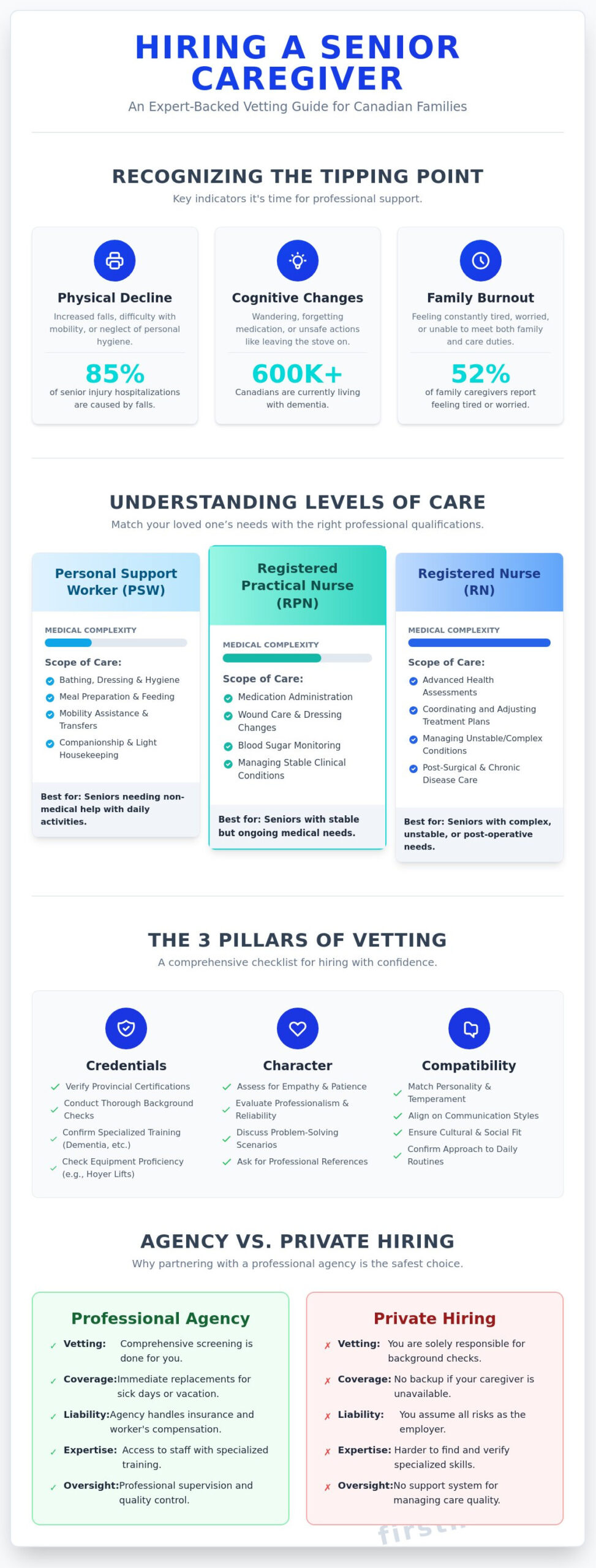
- Use our comprehensive checklist to vet a senior caregiver based on the three essential pillars: credentials, character, and compatibility.
- Learn practical steps to prepare your home and introduce new support to a resistant senior with empathy and clarity.
- Discover why a professional agency provides the most reliable coverage and protection compared to the risks of private hiring.
Evaluating the Need for a Professional Senior Caregiver
Deciding to bring a professional into your home is a pivot toward stability. A professional senior caregiver provides structured support that goes beyond simple assistance. They manage daily living activities, monitor health changes, and offer social engagement. To understand the full scope of this role, it helps to ask What is a caregiver? and how their duties differ from casual help. In Canada, home care is categorized into three tiers. Companionship focuses on social interaction. Home support handles meal prep and laundry. Complex nursing care requires licensed professionals for medical tasks like wound care or catheter management.
Family members often reach a tipping point where care becomes unsustainable. Statistics Canada reported in 2022 that 52% of family caregivers feel tired or worried due to their responsibilities. When you delegate these tasks, you stop being a full-time manager and start being a family member again. This shift improves senior health outcomes by ensuring professional standards are met every day without the inconsistency of an exhausted family schedule.
Signs Your Loved One Requires Professional Support
Physical indicators are often the first warning. If your loved one has experienced more than one fall in the last 6 months, their safety is at risk. Public Health Agency of Canada data shows falls cause 85% of senior injury hospitalizations. Cognitive changes like wandering or forgetting to turn off the stove are critical signals. Over 600,000 Canadians currently live with dementia, requiring specialized supervision. Social isolation is equally dangerous. It increases the risk of depression by 40% in seniors who live alone without regular interaction. Professionals identify these shifts before they become emergencies.
The Strategic Advantage of Professional Caregiving
Professional staff bring a level of consistency that is hard for busy families to maintain. They provide rigorous medication management, ensuring doses aren’t missed or doubled. A trained senior caregiver has a sharp eye for early symptom detection, catching issues like dehydration or minor infections before they require an ER visit. This proactive approach keeps seniors in their homes longer and reduces hospital readmission rates. Most importantly, it restores the family dynamic. By offloading the heavy lifting, you can focus on quality time rather than clinical checklists. It’s a pragmatic solution that values the senior’s dignity and the family’s mental health.
Essential Qualifications: Understanding the Levels of Care
Choosing the right senior caregiver depends entirely on your loved one’s clinical needs and daily requirements. In 2026, the Canadian healthcare landscape demands a precise match between medical complexity and provider credentials to ensure safety. You’ll find that staffing levels are generally categorized by the depth of medical training and the specific tasks the professional is legally permitted to perform.
Personal Support Workers (PSW) vs. Nursing Staff
PSWs are the most common choice for families. They provide essential assistance with Activities of Daily Living (ADLs). This includes bathing, dressing, meal preparation, and light housekeeping. If your parent is physically healthy but needs help with mobility or hygiene, a PSW offers the most cost-effective support. According to this National Institute on Aging guide to caregiving, matching the provider’s skills to the senior’s functional abilities is the first step in a successful transition.
When medical needs become clinical, you must look toward nursing staff. A Registered Practical Nurse (RPN) handles stable clinical tasks. They manage medication administration, wound care, and blood sugar monitoring. For highly complex or unstable health conditions, a Registered Nurse (RN) is necessary. RNs provide advanced health assessments and coordinate with primary care physicians to adjust treatment plans in real time. Hiring an RN is a strategic move for families managing post-surgical recovery or chronic disease complications.
Specialized Care Competencies to Look For
General training doesn’t always cover the nuances of specific diagnoses. For the 600,000+ Canadians currently living with dementia, you should prioritize a senior caregiver with specialized certifications. Look for programs like U-First! or Gentle Persuasive Approaches (GPA). these ensure the provider understands behavioral triggers and can de-escalate stressful situations without distress.
- Equipment Proficiency: Verify that the caregiver has current training for Hoyer lifts, ventilators, or oxygen tanks if these are present in the home.
- Palliative Care: End-of-life support requires a specific focus on comfort, pain management, and emotional dignity rather than curative measures.
- Soft Skills: Patience and empathetic communication are just as vital as clinical skills. A caregiver who listens well can identify subtle changes in health before they become emergencies.
Continuous education is a hallmark of a professional. Ask for proof of up-to-date CPR and First Aid certifications. In 2026, many provinces have introduced new registry requirements to track these credentials. High-quality care is an investment in your family’s peace of mind. If you need to bridge the gap between government subsidies and the cost of private nursing, you can leverage your home equity to secure the necessary funding for a qualified senior caregiver. This approach ensures your loved one receives premium care without compromising your monthly cash flow.
The Ultimate Senior Caregiver Vetting Checklist
Vetting a senior caregiver requires more than a gut feeling. It’s about building a safety net for your family. We use a framework focused on three pillars: Credentials, Character, and Compatibility. This structure ensures your loved one receives professional care while you maintain peace of mind. By following a logical sequence, you can filter out unqualified candidates and focus on those who offer genuine support.
Families often choose between agency-vetted staff and private hires. Agency-managed care offers a 40% reduction in administrative risk for the homeowner. These organizations handle the heavy lifting of background checks, liability insurance, and provincial workers’ compensation compliance. They act as a partner in your safety, ensuring every staff member is bonded and professionally insured. While a private hire might seem cheaper upfront, the cost of a single liability claim in Canada can exceed C$50,000, making the agency route a more secure financial choice.
Start your initial consultation with these direct questions to gauge their readiness:
- Can you provide a Vulnerable Sector Check issued within the last 12 months?
- How do you track and report daily medication adherence and vitals?
- What is your specific protocol if a senior falls while you’re the only one home?
- Are you comfortable using digital health portals to share real-time updates with the family?
The Clinical and Background Verification
Professionalism starts with verifiable data. Verify current registration with provincial regulatory bodies such as the College of Nurses of Ontario or the BC College of Nurses and Midwives. Confirm they hold a valid Vulnerable Sector Check (VSC) processed by local police services. Check for up-to-date CPR Level C and First Aid certifications. If your loved one has a specific diagnosis like Parkinson’s or Alzheimer’s, ask for specialized training certificates from recognized Canadian health associations. This ensures they understand the nuances of the condition and can manage symptoms effectively.
The Behavioral Interview: Assessing the ‘Fit’
Clinical skills are only half the equation. Use situational questions to test their problem-solving under pressure. Ask, “How would you handle a senior refusing medication?” Look for answers that prioritize patience and de-escalation over force. Schedule a paid 2-hour trial visit to see the senior caregiver in action. Observe their body language and how they engage your loved one in conversation. A high-quality caregiver maintains clear documentation, reporting health status changes immediately to prevent minor issues from becoming hospital emergencies.
Managing the Transition to Professional In-Home Care
Bringing a new person into a private residence is a significant shift for any family. Success depends on preparation and clear expectations. You aren’t just hiring help; you’re redesigning the daily flow of the household to prioritize safety and comfort. By treating the first 30 days as a structured onboarding period, you reduce friction and build a sustainable routine.
Preparing the Home for Safety and Efficiency
Safety is the first priority. The Public Health Agency of Canada reports that falls cause 85% of senior injury hospitalizations. Before the first shift, walk through the home to remove trip hazards like loose rugs or cluttered hallways. Install grab bars in bathrooms and ensure lighting levels reach at least 300 lux in workspaces. Efficiency matters too. Designate a specific drawer or shelf for your senior caregiver to store gloves, sanitizers, and daily logs. Having a central “care station” prevents the frustration of searching for supplies during an emergency. Ensure all medications are in a locked, labeled organizer with a clear schedule attached to the cabinet door.
The Introduction: Building Trust with Your Senior
Resistance is a natural response to a loss of independence. Avoid a sudden “hand-off” approach. Instead, schedule a 60 minute “meet and greet” where the senior remains the central figure in the conversation. Let them explain their own morning routine or how they like their tea. In March 2024, geriatric specialists noted that seniors who participate in the interviewing process report 40% higher satisfaction with their care. Start with a gradual entry. A two-hour shift for light socialization is easier to accept than an immediate eight-hour block of personal care. Encourage the senior caregiver to find common ground, whether it’s a shared interest in the Toronto Blue Jays or a love for gardening, to bridge the professional gap with a personal connection.
Organization prevents miscommunication. Create a “Care Plan Folder” that stays in a visible location. This physical document should include:
- Emergency contact numbers for family and Canadian primary care physicians.
- A detailed list of allergies and dietary restrictions.
- Specific instructions for medical equipment or mobility aids.
- A daily log sheet to track mood, appetite, and medication adherence.
Establish boundaries on day one. Be explicit about house rules regarding cell phone use, guest policies, and use of the family vehicle. Clear communication isn’t cold; it’s professional. It protects the caregiver from burnout and ensures your senior receives consistent, high-quality attention. If you find that the cost of professional support is stretching your monthly budget, consider leveraging home equity for care costs to ensure your loved one gets the consistent help they deserve.
Why Partnering with a Staffing Agency is the Safest Choice
Hiring a senior caregiver privately often seems cost-effective at first. However, the hidden risks can be substantial. When you hire an independent worker, you become a legal employer. This means you’re responsible for Canada Pension Plan (CPP) contributions, Employment Insurance (EI) premiums, and Workplace Safety and Insurance Board (WSIB) coverage. A single workplace injury could cost a family upwards of C$50,000 in legal and medical liabilities if proper insurance isn’t in place. Firstheld eliminates these risks by acting as the employer of record. We handle every administrative detail from payroll to liability insurance, so you can focus on your family.
Agencies also solve the problem of coverage gaps. If a private senior caregiver calls in sick at 6:00 AM, the family is left to scramble. Firstheld maintains a deep roster of qualified professionals to ensure seamless coverage. Our system guarantees that a vetted professional is always available, providing 24/7 reliability that independent hires simply can’t match. This consistency is vital for seniors with cognitive challenges who rely on a steady routine.
Professional clinical oversight is the cornerstone of our model. Unlike private hires who work in isolation, Firstheld caregivers are supported by a clinical leadership team. This means if a patient’s condition changes, our RNs are ready to adjust the care plan immediately. This proactive approach helps prevent avoidable hospital readmissions, which can cost the Canadian healthcare system over C$15,000 per stay. We take care of the heavy lifting, from initial vetting to ongoing performance reviews, so your only job is being a supportive family member.
The Firstheld Advantage: Rigorous Vetting Standards
Our screening process is designed to exceed provincial standards. We conduct thorough background checks and verify the professional standing of every Registered Nurse (RN), Registered Practical Nurse (RPN), and Personal Support Worker (PSW) on our team. Only 5% of applicants successfully pass our multi-stage interview and skills assessment process. This ensures we provide home care assistance that evolves as your loved one’s medical needs change. We don’t just find a worker; we match specific clinical skills to the unique health profile of your family member, ensuring a perfect fit from day one.
Simple, Transparent, and Professional Care Solutions
We believe that professional care should be accessible and straightforward. Our team provides qualified experts for both clinical environments and private residences. Whether you need post-surgical support or long-term companion care, our solutions are tailored to your specific goals and budget. You can explore our home care services to see how we customize support for families across the region. We prioritize quality and compassion in every interaction, ensuring your loved one receives the dignity they deserve without the administrative headache.
Ready to secure the best support for your family? Book a consultation with our staffing experts today to build a care plan that works.
Taking the Next Step Toward Quality In-Home Support
Finding the right support doesn’t have to be a source of stress for Canadian families. By using a comprehensive vetting checklist and identifying the specific levels of care required, you can make a decision rooted in confidence rather than urgency. Managing the transition to professional home support ensures your family member maintains their dignity while receiving the specialized attention they deserve. It’s about looking forward to a safe, sustainable environment that adapts to their changing needs.
Since 2021, FirstHeld has focused on delivering compassionate care through a human-centric approach. We handle the heavy lifting by performing rigorous vetting for all PSW, RN, and RPN staff across our national network. This specialized home support expertise means you don’t have to navigate the complexities of background checks or credential verification alone. For families seeking comprehensive guidance on in home senior care options and clinical standards, our approach ensures every aspect of your loved one’s health and safety is addressed. Selecting a qualified senior caregiver is the most impactful choice you’ll make for your family’s peace of mind in 2026. You deserve a partner who values safety and transparency as much as you do.
Secure a qualified senior caregiver for your loved one today
You’ve got the tools and the knowledge to move forward. Better care is within reach, and your family’s brighter future starts with this single, proactive step.
Frequently Asked Questions
What is the difference between a senior caregiver and a home health aide?
A senior caregiver primarily provides non-medical support like meal preparation, companionship, and help with daily chores. Home health aides perform clinical tasks under the supervision of a nurse, such as wound care or monitoring vital signs. Most families find that a senior caregiver meets 85% of their daily needs without requiring the higher cost of medical certification. Caregivers focus on quality of life and safety at home.
How much does it typically cost to hire a professional senior caregiver in Canada?
Hiring a senior caregiver in Canada typically costs between C$25 and C$45 per hour in 2026. Private rates often sit at the lower end around C$22 to C$30, while agency fees cover insurance and background checks. In urban centers like Toronto or Vancouver, you should expect to pay a 15% premium due to high demand. Budgeting C$3,500 monthly for part-time help is a common baseline for many families.
Can a senior caregiver help with medication administration?
A senior caregiver can provide medication reminders and assist with opening pre-filled blister packs, but they cannot legally administer injections or manage complex pill sorting. They ensure your loved one takes their 9:00 AM dose correctly to prevent the 25% of hospital admissions caused by medication errors. For actual administration of prescriptions, you’ll need a Registered Practical Nurse or a Personal Support Worker with specific delegated authority.
Is it better to hire a caregiver privately or through an agency?
Agencies offer immediate backup staff and handle all payroll taxes, whereas private hiring requires you to act as a legal employer. Agencies vet their staff through 3-step background checks, saving you roughly 20 hours of administrative work. Private caregivers often cost 30% less per hour but leave you responsible for WSIB coverage and liability. Choose an agency if you value speed and reduced legal risk for your family.
What should I do if my parent refuses to have a caregiver in the house?
Introduce the caregiver as a “housekeeper” or “personal assistant” to help with laundry rather than personal care. Start with a 2-hour trial shift once a week to build rapport and trust. Data shows that 60% of seniors accept help more readily when they feel they’re in control of the selection process. Focus on how the extra help allows them to maintain their independence at home for a longer period.
Are senior caregivers covered by provincial health insurance or private insurance?
Provincial plans like OHIP or BC MSP rarely cover private home care, usually providing only 1 to 2 hours of daily support through government-contracted providers. Private long-term care insurance policies often reimburse between C$1,500 and C$5,000 monthly depending on your specific tier. Check your Manulife or Sun Life policy for “Home Care” clauses. Many families use home equity to bridge the gap when government funding falls short.
How many hours of care does a senior typically need?
A senior typically needs 15 to 20 hours of care per week for basic assistance with meals, mobility, and hygiene. If the individual has advanced dementia, this requirement often jumps to 24/7 supervision to ensure their safety. Statistics from 2024 indicate that 45% of Canadian families start with 4-hour blocks three times a week. This schedule provides enough support to prevent family burnout while keeping the monthly budget manageable.

Pingback: How to Hire a Personal Support Worker Safely - Firstheld Healthcare Staffing Services