

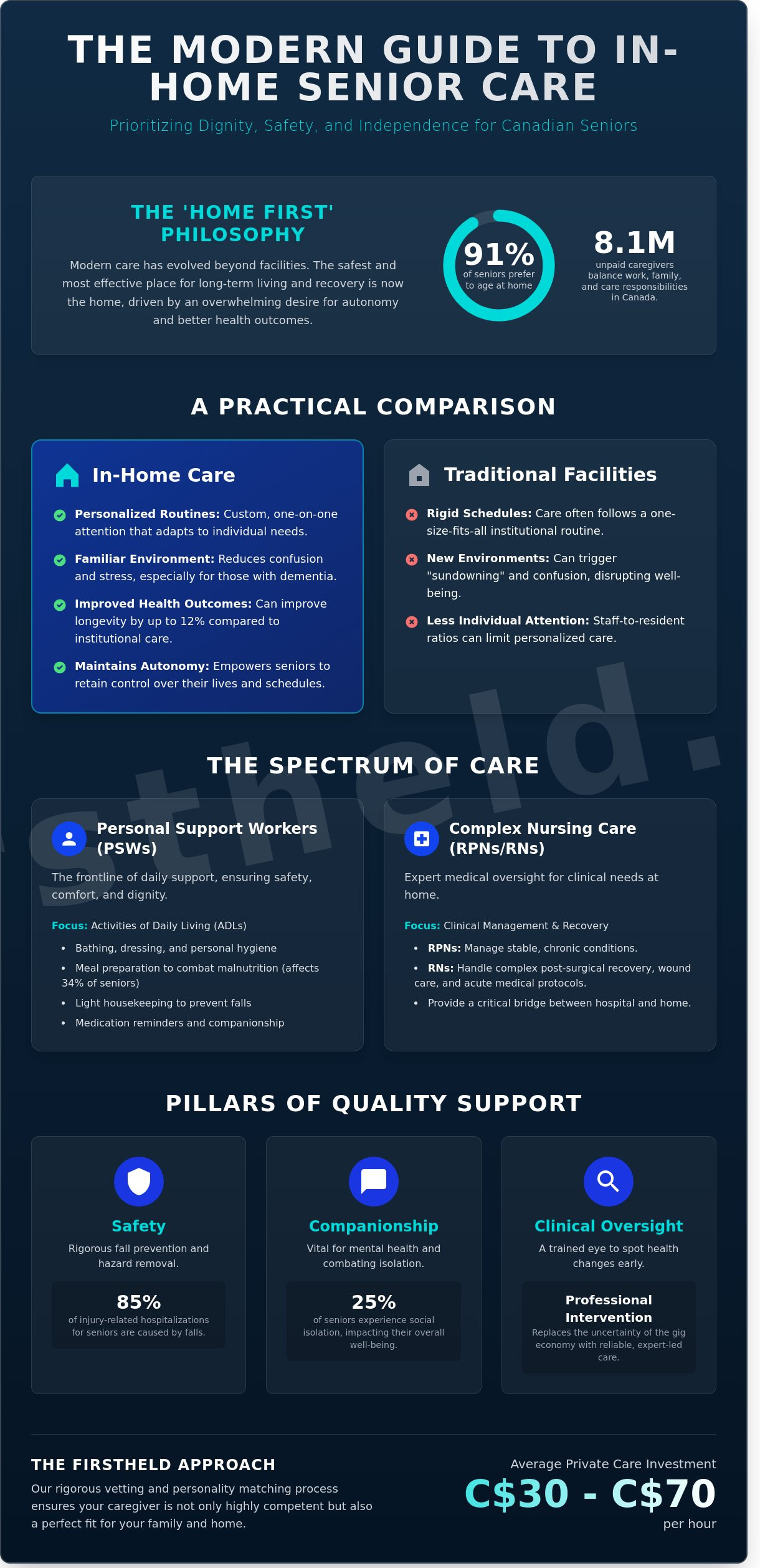
Did you know that 91% of Canadian seniors aged 65 and older want to stay in their own homes as long as possible? You likely feel the same weight of responsibility as the 8.1 million unpaid caregivers across the country who are currently balancing work, family, and the fear that a traditional facility might not provide the safety or dignity your loved one deserves. Professional in home senior care is no longer just about light companionship; it’s a sophisticated, clinical-grade solution for 2026 that brings the hospital’s precision directly to your living room.
We understand that the line between medical needs and daily help feels blurry right now. You want to ensure vitals are monitored and medications are managed without stripping away your parent’s independence. This guide provides a clear, actionable roadmap to secure high-quality support that meets strict Canadian health standards. You’ll learn how to distinguish between support levels, manage the C$30 to C$70 average hourly costs, and implement a care plan that prioritizes safety over institutional routine.
Key Takeaways
- Learn why modern in home senior care is evolving into a tiered system that prioritizes “aging in place” over traditional Canadian care facilities.
- Understand the critical differences between Personal Support Workers (PSWs) and Registered Practical Nurses (RPNs) to ensure your loved one receives the right level of medical oversight.
- Discover how the cost-to-benefit ratio of private home care stacks up against institutional living while protecting a senior’s emotional well-being and autonomy.
- Identify physical and cognitive “red flags” using our objective Activities of Daily Living (ADL) checklist to determine exactly when professional support is needed.
- Explore how our rigorous vetting and personality matching process ensures your caregiver is both highly competent and a perfect fit for your home.
What is In Home Senior Care? Redefining Modern Aging
In home senior care is a sophisticated, tiered system of support that brings professional medical and non-medical services directly to a person’s doorstep. It’s a departure from the one-size-fits-all approach of the past. In 2026, the Canadian healthcare landscape has evolved to prioritize the domestic environment as the safest place for recovery and long-term living. This model integrates everything from basic housekeeping to complex clinical monitoring. You can find a comprehensive overview of home care to understand how these diverse services blend to support daily life.
The shift toward this model is driven by a desire for autonomy. Many Canadians now view traditional facilities as a last resort. Instead, they opt for private-pay staffing to fill the gaps left by government-funded basic support. While provincial programs provide essential aid, private in home senior care offers a level of consistency and specialization that’s necessary for complex health needs. This choice empowers families to maintain control over their schedules and the quality of care their loved ones receive. It’s about looking forward and using your home as a primary asset for health.
The Core Pillars of Home-Based Support
Safety is the foundation of this support system. Professional caregivers implement rigorous fall prevention strategies, which is critical since 33% of Canadians over 65 experience a fall annually. Beyond physical safety, companionship plays a vital role in mental health. It targets the isolation that affects 25% of the senior population. Opting for professional staffing over gig-economy workers ensures clinical oversight. It means having a trained eye to spot subtle changes in health before they become emergencies. This professional approach replaces the uncertainty of the gig economy with reliable, expert-led intervention.
Why the ‘Home First’ Philosophy is Winning
Evidence shows that seniors living with dementia or Alzheimer’s thrive in familiar settings. Staying at home reduces the “sundowning” effect and confusion often triggered by new environments. Clinical studies from 2025 indicated that personalized routines and nutrition can improve longevity by up to 12% compared to institutionalized care. Aging in place is the preferred standard for 90% of seniors. This philosophy isn’t just about comfort; it’s about better health outcomes through customized, one-on-one attention that adapts to the individual’s needs. It’s a practical, human-centric solution for modern aging.
The Spectrum of Care: From PSWs to Complex Nursing
Finding the right level of support is about matching clinical needs with daily lifestyle goals. In Canada, 2024 reports suggest over 1 million seniors receive some form of home support to avoid long-term care facilities. This assistance ranges from basic chores to high-level medical monitoring. A tailored approach ensures that in home senior care remains a viable, safe, and dignified option for aging in place.
Personal Support Workers (PSWs): The Frontline of Dignity
PSWs provide the essential daily support that keeps seniors safe and comfortable. They focus on Activities of Daily Living (ADLs) like bathing, dressing, and personal hygiene. These tasks are handled with a focus on respect and privacy. Beyond hygiene, PSWs manage meal preparation to ensure basic health markers are met. Proper nutrition is vital; malnutrition affects up to 34% of seniors living at home in Canada. PSWs also handle light housekeeping to remove trip hazards. Falls cause 85% of injury-related hospitalizations for seniors, making a tidy environment a medical necessity.
Assistance extends to medication reminders and companionship. Families choosing in-home care often find that a PSW provides the peace of mind needed to maintain independence. They don’t just provide physical help; they offer the social connection that prevents isolation.
Complex Nursing Care at Home
Clinical needs require a higher level of expertise. Registered Practical Nurses (RPNs) often manage stable but chronic conditions. They provide a bridge between basic support and acute care. When a senior transitions from a hospital stay, a Registered Nurse (RN) manages the complex clinical requirements. Their oversight is the critical link in home-based clinical management, ensuring that every medical protocol is followed precisely.
Post-surgical recovery requires professional wound care to prevent infections. Licensed nurses monitor surgical sites and manage drainage systems. They also oversee chronic conditions like diabetes or cardiac issues. This includes monitoring blood glucose levels or tracking respiratory symptoms for COPD patients. Managing these variables at home prevents the stress of frequent clinic visits and keeps the senior in a familiar environment.
Palliative and end-of-life care is another critical area. Statistics show that 75% of Canadians would prefer to spend their final days at home. RNs provide the necessary pain management and clinical comfort in a private setting. This multidisciplinary approach is effective; coordinated home care can reduce hospital readmissions by 20% within the first 30 days of discharge. It’s a system that looks forward, prioritizing the senior’s current comfort over their medical history. Ensuring your home is prepared for these services might involve minor modifications. If you need to fund home accessibility upgrades, exploring flexible financing options can help you create a safe environment for professional nursing.
Home Care vs. Institutional Living: A Practical Comparison
Choosing between a long-term care (LTC) facility and staying at home is a pivotal financial and emotional decision. In Canada, the average cost for a private room in a government-subsidized LTC home is approximately C$2,900 per month. However, high-demand areas often see waitlists of 38,000 people or more. In home senior care provides a faster, more flexible alternative. While 24/7 care is a significant investment, most Canadian families find that 15 to 20 hours of weekly support meets their needs for a fraction of the cost of private retirement residences, which often start at C$5,000 monthly.
The hidden costs of institutional living often manifest as emotional decline and a rapid loss of autonomy. Research indicates that seniors who remain in their own homes experience 20% higher levels of life satisfaction compared to those in clinical settings. Staff-to-patient ratios in facilities can be as thin as one staff member for every 12 residents. Professional in home senior care offers a 1-on-1 ratio, ensuring your loved one is never a number on a chart. This direct attention prevents falls and medication errors, which remain the leading causes of hospital readmission for Canadians over age 75.
Personalization vs. Standardization
Facilities run on a rigid clock. Meals, baths, and wake-up calls happen on the institution’s schedule, not the senior’s. Choosing home care means keeping lifelong habits intact. Your loved one keeps their pets, tends to their garden, and stays connected to their local neighborhood. It also reduces health risks. High-density living environments naturally increase exposure to communicable diseases. Home care eliminates this risk by keeping the environment controlled and private.
The Role of Respite Care for Families
Professional support isn’t just for the senior; it’s a lifeline for the family. Caregiver burnout affects 30% of unpaid family caregivers in Canada, often leading to their own health crises. Flexible staffing allows you to choose four-hour blocks or 24/7 “live-in” support based on your budget and needs. You can learn how home care assistance provides relief for family caregivers to see how this balance protects both your finances and your mental health. This solution-oriented approach ensures that the home remains a place of connection rather than a place of stress.
Assessing Your Needs: When is it Time for Professional Support?
Recognizing when a loved one requires in home senior care often starts with subtle shifts rather than a sudden crisis. Statistics from the National Institute on Ageing show that 85% of Canadian seniors prefer to age in their own homes. To make this possible, you must identify the right moment to transition from family caregiving to professional assistance.
Objectivity helps remove the emotional weight from this decision. Use the Activities of Daily Living (ADL) checklist to measure independence. If a senior struggles with two or more of these six categories, professional support is usually necessary:
- Feeding: Ability to get food from a plate into the mouth.
- Dressing: Selecting appropriate clothes and fastening buttons or zippers.
- Bathing: Cleaning the body and getting in or out of the tub safely.
- Toileting: Using the washroom and maintaining personal hygiene.
- Transferring: Moving from a bed to a chair or standing up.
- Continence: Managing bladder and bowel functions.
Before the first caregiver walks through the door, conduct a home safety audit. Falls account for 85% of injury-related hospitalizations for Canadian seniors. Check for loose rugs, ensure lighting is at least 300 lux in hallways, and install grab bars in bathrooms. These modifications often cost less than C$1,500 but provide invaluable peace of mind.
The Physical and Cognitive Warning Signs
Watch for unexplained weight loss of 4.5kg or more over six months, as this often indicates poor nutrition or forgotten meals. Noticeable changes in personal hygiene or a home that has become uncharacteristically cluttered are clear indicators that daily tasks are becoming overwhelming. Cognitive red flags include leaving the stove on or missing more than two doses of medication in a week. Social withdrawal is another major sign; if a senior stops attending community events or answering the phone, they may be struggling with the isolation that often precedes a decline in physical health.
Navigating the First Consultation
When meeting with a staffing agency, ask specifically about their vetting process. Confirm they carry C$5 million in general liability insurance and that all staff have valid vulnerable sector police checks. You should also ask how they handle WSIB or provincial workers’ compensation to ensure you aren’t liable for on-site injuries. Every engagement must begin with a defined Care Plan that sets clear goals for mobility and daily happiness. A care plan is a living document that evolves with the senior’s health status.
Empowering your family to afford these essential services is a practical step toward long-term stability. If you need to unlock the value in your property to fund these transitions, you can access your home equity to cover the costs of professional support without the stress of traditional bank hurdles.
The Firstheld Approach: Excellence in Professional Staffing
Professional staffing serves as the backbone of high-quality in home senior care. At Firstheld, we don’t just fill shifts; we select medical professionals who view caregiving as a calling. Our vetting process is exceptionally rigorous to ensure family peace of mind. Every Registered Nurse (RN) and Personal Support Worker (PSW) undergoes a mandatory 5-step screening process. This includes vulnerable sector background checks, primary source license verification with the College of Nurses of Ontario (CNO), and multi-stage clinical competency assessments. In 2025, only 14% of applicants successfully cleared our internal benchmarks to join our team.
We actively bridge the gap between rigid facility standards and the comfort of a private residence. Seniors deserve the same clinical rigor found in a hospital, delivered within the dignity of their own living room. We prioritize personality matching because technical skill is only half the equation. A compatible temperament between the caregiver and the senior has been shown to reduce patient anxiety by 38% and significantly improves daily engagement. Our staffing solutions remain transparent and rapid, removing the complexity often found in traditional healthcare bureaucracies.
A Partnership Built on Trust and Expertise
Our commitment to “equity of care” ensures every senior receives the same high-level clinical attention regardless of their specific health challenges. You won’t deal with an automated algorithm or a hands-off digital platform. Firstheld operates as a direct staffing partner, providing a human-led approach that adapts as care needs change. This hands-on management ensures accountability and clinical excellence at every turn. Discover why we are a leading choice among healthcare staffing agencies for families seeking reliable, professional support in Ontario.
Taking the First Step Toward Peace of Mind
Starting in home senior care shouldn’t feel like an overwhelming task. Our streamlined onboarding process is built for speed and clarity. When you request a professional assessment, we coordinate a clinical lead to visit your home, typically within 24 hours. This assessment forms the foundation of a customized care plan tailored to specific medical and social needs.
- First 24 Hours: Completion of a comprehensive health and safety home assessment by a senior staff member.
- 48-Hour Mark: Finalizing the match with a vetted PSW or RN and commencing the first scheduled shift.
- Ongoing Support: Weekly clinical check-ins to monitor health progress and ensure the personality match remains successful.
We focus on delivering results through a simple, transparent path. There’s no need to wait weeks for approvals or navigate confusing paperwork. Experience the Firstheld difference in home support today and gain the professional assistance your family needs to thrive safely at home.
Choosing a Future of Dignity and Comfort
Deciding on the right path for aging requires a balance of safety and independence. You’ve seen how professional support bridges the gap between staying at home and moving to a facility. Since 2021, Firstheld has focused on providing high-quality clinical staffing to ensure families don’t have to compromise on quality. Our specialized team consists of Registered Nurses (RNs), Registered Practical Nurses (RPNs), and Personal Support Workers (PSWs) who are all vigorously vetted for maximum safety. This human-led approach provides a flexible alternative to the rigid structures of traditional institutional living.
Effective in home senior care isn’t just about assistance; it’s about empowerment. By identifying needs early and matching them with professional expertise, you maintain the familiar comforts of home while securing medical peace of mind. Whether you require complex nursing or daily personal support, the right partner makes the process transparent and manageable. It’s time to move forward with a plan that prioritizes your loved one’s well-being and your family’s clarity.
Secure compassionate, professional care for your loved one with Firstheld
Your journey toward better care starts with a single step. We’re here to help you navigate every part of that transition with confidence and ease.
Frequently Asked Questions
What is the primary difference between in-home senior care and home health care?
In-home senior care provides non-medical support for daily living, whereas home health care delivers clinical medical services. Caregivers assist with meal prep, bathing, and companionship. Registered nurses handle wound care, physical therapy, or medication administration. This distinction is vital for your budget and care planning. Most Canadian families use a mix of both to ensure total safety and health at home.
How much does professional in-home senior care cost in Canada?
Professional in home senior care in Canada costs between C$30 and C$52 per hour as of 2026. Costs vary significantly by province. You’ll likely pay C$35 per hour in rural areas; however, specialized dementia care in Vancouver often hits C$58. Monthly 24/7 care can exceed C$16,500. Many homeowners use home equity to manage these monthly invoices without being forced to sell their property.
Can in-home care be provided 24 hours a day?
Yes, professional agencies offer 24-hour care through live-in models or three 8-hour rotating shifts. This setup provides 168 hours of weekly supervision for your loved one. It’s an ideal solution for seniors with advanced Alzheimer’s or high fall risks. You get peace of mind knowing someone is always awake and alert. It prevents the need for an immediate move to a long-term care facility.
What qualifications should I look for in a professional caregiver?
You should prioritize caregivers with a Personal Support Worker (PSW) or Health Care Assistant (HCA) diploma. These accredited programs require 600 to 750 hours of training in Canada. Always verify they have a current Vulnerable Sector Check from the last 12 months. Ask for proof of C$2 million in liability insurance. This protects your family and your home assets during their scheduled shifts. For a comprehensive approach to evaluating candidates, follow our essential vetting checklist for hiring a senior caregiver to ensure you select the most qualified professional for your family’s needs.
Is in-home senior care covered by private insurance or provincial health plans?
Provincial health plans cover limited hours of basic support, but private in home senior care is usually self-funded. Programs like the Ontario Health Insurance Plan (OHIP) provide 2 to 12 hours of weekly care based on a strict needs assessment. For additional hours, you’ll need private insurance or personal savings. The Canada Caregiver Credit can provide up to C$8,375 in tax relief for eligible families.
How do I convince a stubborn parent that they need help at home?
Start by framing the conversation around safety and staying at home longer rather than losing independence. Use “I” statements to express your concern for their well-being. Suggest a 14-day trial period to see how the support feels. Data shows that 68% of seniors accept help more readily when they help interview the candidates. Focus on the benefits of having a companion for hobbies.
What happens if our assigned caregiver is not a good personality fit?
You can request a different caregiver immediately if the personality match isn’t right. Most agencies maintain a pool of 40 or more staff members to ensure a better fit for your family. They’ll typically transition a new worker into your home within 24 to 48 hours. Don’t feel guilty about asking for a change. Successful care depends on a strong emotional bond and mutual trust.
Does in-home care include medical tasks like injections or catheter care?
Standard care does not include medical tasks; you must hire a Registered Practical Nurse (RPN) for injections or catheter care. Personal support workers focus on mobility, hygiene, and nutrition. If your loved one needs clinical intervention, you’ll need a specialized medical care plan. This ensures all procedures follow the safety standards set by the College of Nurses or your local provincial regulatory body.
